How to Prepare Your Boat Lift for Hurricane Season in Coastal NC

Published August 13, 2026

Hurricane season is a fact of life on the North Carolina coast. From June through November, waterfront property owners in Wilmington, Wrightsville Beach, and surrounding communities keep one eye on the Atlantic and the other on their docks. Boats get trailered, loose items get secured, and waterfront structures get checked. But boat lifts are easy to overlook in the rush to prepare, and a lift that isn’t ready for a storm can come out of it with serious damage.

Getting your lift ready before storm season starts isn’t complicated, but it does require some attention to the right things. Here’s what coastal NC boat owners and waterfront property managers should know heading into hurricane season.
Start with a Pre-Season Inspection

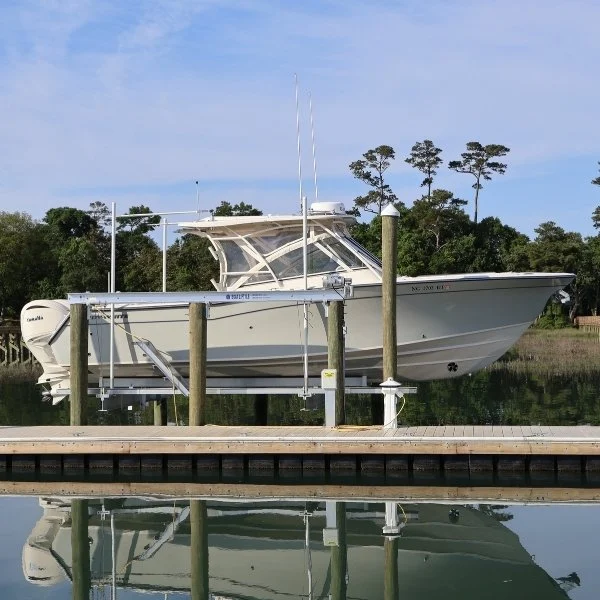
The best time to find out your lift has a problem is before a storm is in the forecast, not after. A professional inspection in the spring or early summer gives you a clear picture of where your system stands heading into the most demanding months of the year.

An inspection covers the components that take the most stress during severe weather: cables, pulleys, the motor and drive system, hardware connections, and the cradle structure. If anything is worn, corroded, or operating outside of normal parameters, catching it before storm season means you have time to schedule repairs without the urgency of an approaching system.

F & S Lift Pro handles boat lift inspections and maintenance for residential and commercial clients throughout the Wilmington and Wrightsville Beach area. A pre-season service check is one of the most straightforward things you can do to protect your lift investment before the weather turns serious.

Address Any Known Repair Issues Before June

If your lift has been running slow, making unusual noise, lifting unevenly, or showing any other signs of wear, get those issues resolved before hurricane season is underway. A lift with existing mechanical problems is far more vulnerable to storm damage than one that’s operating properly.

Storm surge, wave action, and high winds put extreme stress on lift systems. A cable that’s already showing wear may snap under surge load. A motor that’s been struggling through the spring may fail completely when the system is put under storm conditions. Deferred repairs have a way of becoming emergencies when severe weather arrives.

Booking a repair appointment before the season starts gives you time to get the work done on a normal schedule. Waiting until a named storm is in the Gulf Stream means competing with every other waterfront property owner in the area trying to do the same thing.

Remove or Secure Your Boat Before a Storm

This one goes beyond the lift itself, but it’s worth including because the lift and the boat are connected. Most marine professionals and emergency management guidance for coastal NC recommends removing your boat from the lift and trailering it inland ahead of any significant storm.

A boat left on a lift during a hurricane or major tropical system is exposed to surge, wave action, and wind that can throw it off the cradle, damage the lift structure, or cause both to end up somewhere you don’t want them. Trailering the boat removes that risk entirely and takes the load off the lift during the worst of the weather.
If trailering isn’t an option, check with your marina or dock provider about storm protocols for boats staying in the water.

Raise the Lift Cradle Fully

If your boat is removed before the storm, raise the lift cradle to its highest position before the weather arrives. A cradle sitting at water level or partially raised is more exposed to surge and debris than one that’s fully elevated.

Raising the cradle also reduces the stress on cables and the drive system during surge events. Water moving through a dock structure during a storm carries a lot of force, and minimizing what’s in its path helps reduce the chance of structural damage to the lift.

After the Storm: Inspect Before You Use It

Once a storm passes, resist the urge to get the lift running again before you’ve had a chance to assess it. Surge, debris, and wind can cause damage that isn’t visible from the dock. A lift that looks fine on the surface may have cable damage, shifted components, or motor issues that only show up under load.

Running a damaged lift puts your boat at risk and can turn a manageable repair into a much more expensive one. A post-storm inspection gives you a clear picture of what the system looks like after the weather and what, if anything, needs attention before you put the lift back into regular use.

F & S Lift Pro handles post-storm inspections and repairs for waterfront properties throughout Wilmington, Wrightsville Beach, and the surrounding coastal communities. If your lift took on storm damage or you just want to make sure everything is in order after a significant weather event, the team can assess the system and complete any repairs needed to get it back to full operation.

Storm Season Preparedness Starts Before the Storms Do

The waterfront communities around Wilmington and Wrightsville Beach know better than most what a serious storm can do. Preparing your boat lift before hurricane season is active, getting known repairs handled early, and scheduling a post-storm inspection after significant weather are the habits that keep lift systems running year after year on the North Carolina coast.

F & S Lift Pro provides boat lift repair and maintenance for residential and commercial clients throughout the area, backed by the local marine experience F & S Marine has built since 1975. Whether you’re preparing for the season ahead or recovering from a storm that just passed, the team is ready to help.

Schedule boat lift service online today. F & S Lift Pro’s online booking system makes it easy to request an appointment, track your service, review your quote, and pay without the back-and-forth. Keep your lift running right with local service backed by F & S Marine.


Share This Story, Choose Your Platform!