Rusty Boat Lift: Can It Be Salvaged?
Published November 19, 2026
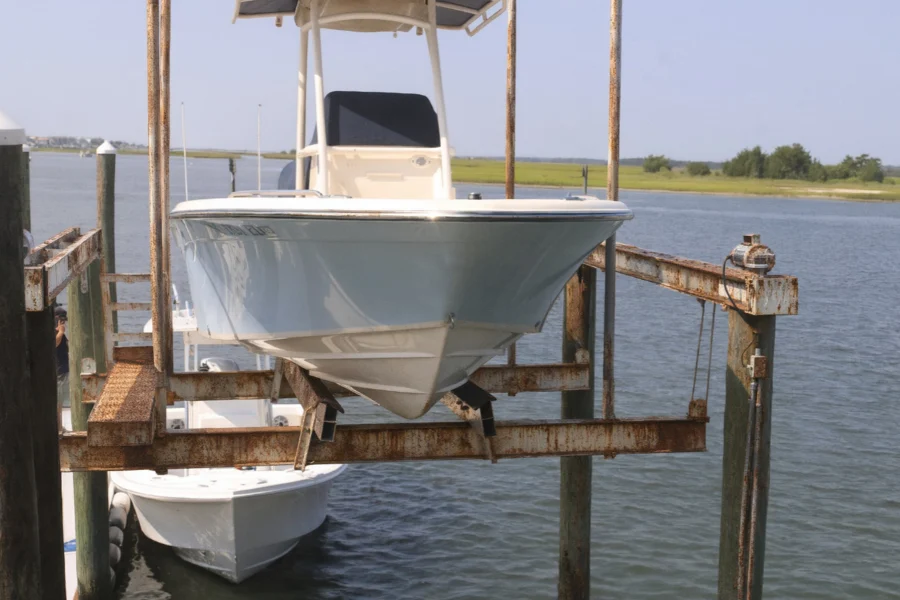
Rust and corrosion are common problems for boat lifts along the North Carolina coast. Salt air, moisture, tides, storms, and regular use all expose metal components to conditions that can speed up deterioration.
The good news is that a rusty boat lift doesn’t automatically need to be replaced. In many cases, the answer depends on where the corrosion is, how deep it goes, and whether the affected parts are structural or replaceable.
Surface Rust vs. Structural Corrosion
Not all rust means the same thing.
Light surface rust on hardware or exposed metal may be manageable if it’s caught early. Cleaning, replacing worn hardware, and protecting the area from further corrosion may be enough to keep the lift in service.
Deeper corrosion is more serious, especially when it affects load-bearing components, mounting points, brackets, beams, or other parts of the lift structure. Once metal has lost significant strength, simply cleaning the rust off won’t restore it.
Which Rusty Parts Can Usually Be Replaced?
Many boat lift components are designed to be serviced or replaced over time. These can include:
F&S Lift Pro repairs common problems involving cables, motors, pulleys, hardware, switches, and controls, so corrosion on one of these components does not necessarily mean the entire lift is finished.
When Is Rust a Bigger Problem?
A rusty lift should be professionally inspected if you notice:
F&S recommends stopping operation when a lift is showing serious cable damage, uneven movement, or other signs that continued use could make the problem worse.
Can Regular Maintenance Slow Down Corrosion?
Yes. Coastal boat lifts need regular attention because salt and moisture can accelerate wear much faster than in freshwater environments. F&S recommends routine inspection for corrosion, rust, cable wear, loose hardware, and motor strain, along with professional maintenance once or twice a year.
Freshwater rinsing, lubrication where appropriate, and replacing worn components before they fail can all help extend the life of the lift.
Repair or Replace?
If the corrosion is limited to replaceable parts, the lift may still have plenty of useful life left.
If rust has spread through major structural components, repairs are becoming frequent, or the lift is no longer stable under load, replacement may be the better long-term option.
The best way to know is to have the system inspected and evaluate the condition of the frame, hardware, cables, motor, and other major components together.