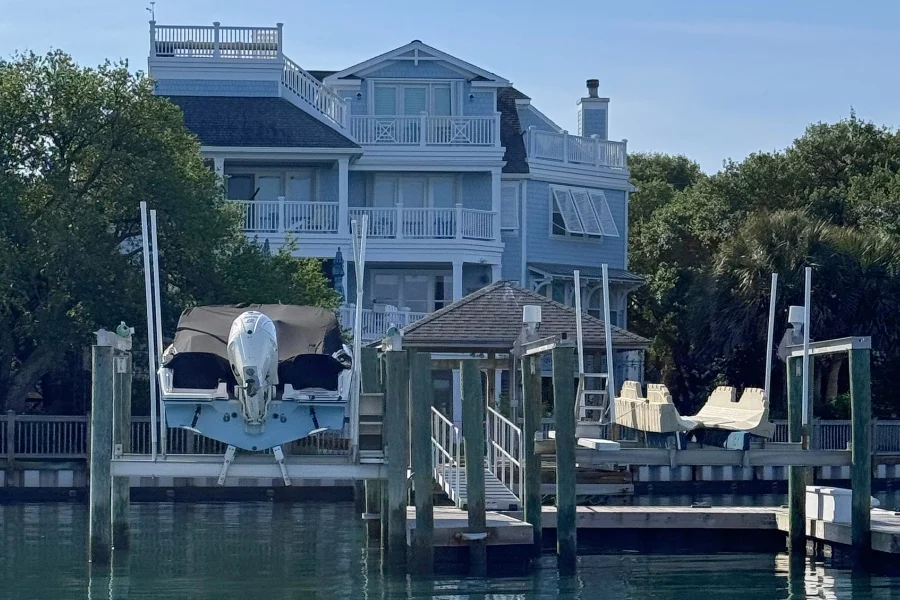
Best Practices for Winterizing Your Boat Lift
Published October 2, 2026
Winter along the North Carolina coast may be milder than in other parts of the country, but that doesn’t mean your boat lift should be ignored during the off-season.
Salt air, moisture, temperature changes, winter storms, and periods of limited use can all affect lift components. A little preparation can help reduce corrosion, catch worn parts early, and make sure the lift is ready when boating season picks back up.
Give the Lift a Thorough Inspection
Before winter, take a close look at the major components of the lift.
Check for:
F&S recommends professional maintenance at least once or twice a year, with a fall checkup being a good time to prepare the lift for winter weather and coastal storms.
Rinse Away Salt and Marine Buildup
Salt and moisture can continue damaging metal components even when the lift isn’t being used regularly.
Rinse cables, cradles, hardware, and other exposed parts with fresh water to remove salt and buildup. F&S specifically recommends fresh-water rinsing after saltwater use to help reduce galvanic corrosion.
Allow components to dry before covering or storing anything that could trap moisture.
Lubricate Moving Parts
Pulleys, gears, hinges, bearings, and other moving components should be properly lubricated before extended periods of limited use.
Use a marine-grade lubricant recommended for your lift. F&S advises using a high-tack marine grease designed to resist water washout rather than general-purpose automotive grease.
Proper lubrication can help reduce corrosion and keep parts from binding after sitting unused.
Protect Electrical Components
Electrical systems deserve extra attention during wet winter weather.
Inspect visible wiring, switches, control boxes, and connections for corrosion, damage, or signs of moisture. Make sure enclosures remain sealed and follow the lift manufacturer’s recommendations for disconnecting or protecting electrical equipment during extended storage. HydroHoist also recommends protecting motorized lift controls and electrical components from moisture during the off-season.
Electrical repairs around the water should be left to a qualified professional.
Check the Lift After Coastal Storms
Winterizing isn’t always a one-time task.
After strong winds, heavy rain, unusually high tides, or freezing conditions, inspect the lift for shifting, loose hardware, debris, or visible damage. Manufacturer guidance recommends checking lift frames and connections after extreme weather rather than waiting until spring to discover a problem.
Follow the Manufacturer’s Winterization Instructions
Different lift systems may have different requirements.
Hydraulic, cable-driven, floating, and other lift types can have specific recommendations for fluid, batteries, controls, hoses, or storage position. In areas where freezing temperatures are possible, manufacturers may recommend additional steps to protect fluids, seals, valves, and other components.
Always check the owner’s manual before disconnecting, draining, or removing any part of the lift.