Professional Boat Lift Inspection: Why It Matters
Published November 19, 2026
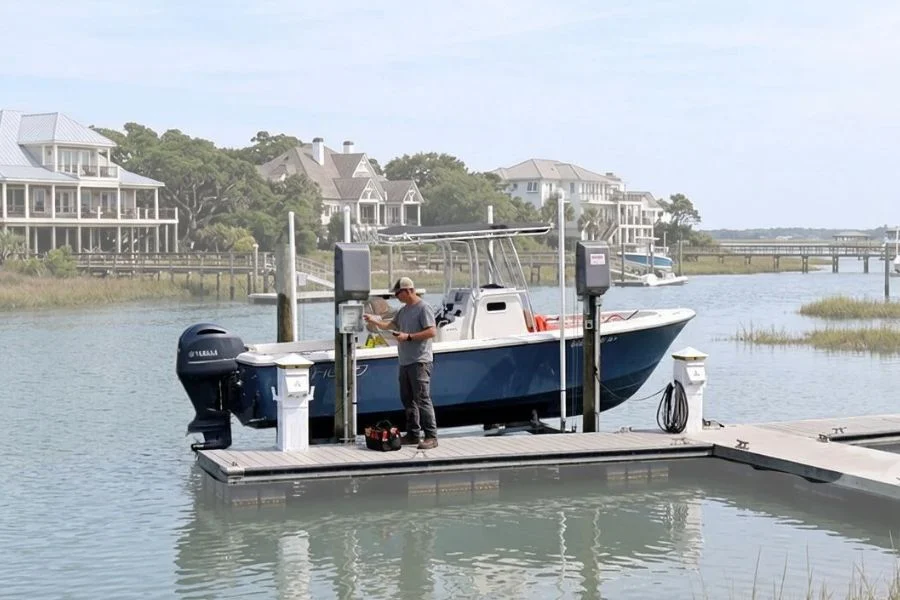
A quick look at your boat lift can tell you if something is obviously wrong, but it may not reveal every problem.
Cables can wear unevenly, hardware can loosen, motors can begin to strain, and corrosion can develop in places that are easy to overlook. A professional inspection gives the entire system a closer look and can help catch small issues before they turn into larger repairs.
What Does a Boat Lift Inspection Include?
A professional inspection may include checking:
The exact inspection can vary depending on the lift type and condition, but the goal is to evaluate how the system is operating as a whole.
Why Visual Checks Are Not Always Enough
Boat owners should still keep an eye on the lift between service visits, but some problems are difficult to spot without a closer inspection.
A cable may look fine from one angle but be wearing unevenly on the drum. A motor may still operate but be drawing more power than normal. Hardware can also loosen gradually without creating an obvious problem right away.
A technician can look beyond the most visible symptoms and check for signs that one worn component may be putting extra stress on another.
Inspections Can Catch Problems Early
Many major lift repairs start as smaller issues. Loose hardware can affect alignment. Poor cable tension can lead to uneven lifting. A worn bearing can create additional strain on the motor or gearbox.
Finding those problems early may make the repair simpler and help reduce the chance of an unexpected breakdown.
Coastal Conditions Make Inspections More Important
Boat lifts around Wilmington and southeastern North Carolina face constant exposure to salt, moisture, tides, storms, and humidity.
Those conditions can accelerate corrosion and wear on cables, electrical components, hardware, motors, and structural parts. Even a lift that appears to be working normally can benefit from regular inspection in a coastal environment.
When Should You Schedule an Inspection?
A professional inspection is worth considering if:
F&S Lift Pro recommends professional maintenance once or twice a year for many coastal lifts, which also gives technicians a chance to inspect the system for developing problems.