What Does Routine Boat Lift Maintenance Include?
Published October 1, 2026
A boat lift can appear to be working properly while wear is developing behind the scenes. Each time the system raises or lowers your boat, its cables, pulleys, motor, controls, and supporting components work together under a significant load. Add salt air, moisture, changing tides, frequent use, and even a dependable lift will need regular attention.
Routine boat lift maintenance is designed to identify wear early, make minor adjustments, and help the system continue operating safely and smoothly. While the exact service needs depend on the type and condition of your lift, here are several areas that may be checked during a maintenance visit.
Looking for Corrosion, Rust, and Wear
Coastal conditions are hard on metal equipment. Salt and moisture can gradually affect cables, pulleys, hardware, motor housings, and other exposed components.
During routine maintenance, the lift can be inspected for visible corrosion, rust, loose hardware, and signs of wear. Some problems may seem minor at first, but they can place additional stress on surrounding components when left unaddressed.
Catching these changes early gives you an opportunity to handle smaller concerns before they interfere with the operation of the lift.
Inspecting Lift Cables
Lift cables carry the weight of the boat as the system raises and lowers. Repeated use, improper winding, corrosion, and exposure to the coastal environment can all contribute to wear.
A maintenance inspection may look for:
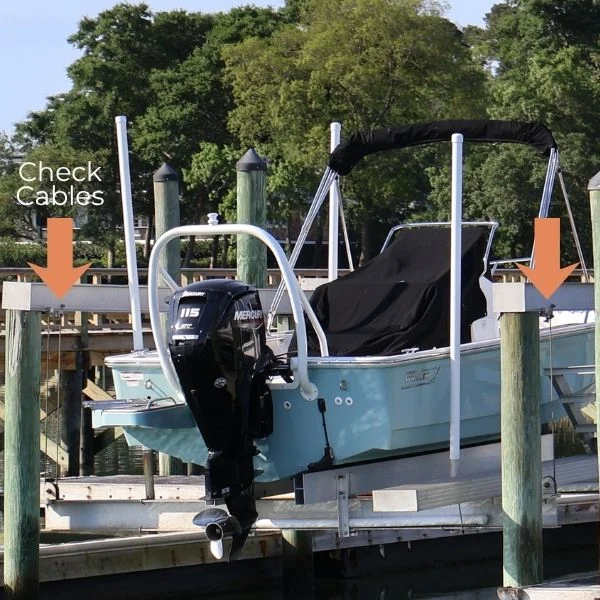
Damaged cables should not be ignored. Continuing to operate a lift with visible cable problems can increase the risk of uneven movement or a more serious failure.
Lubricating Moving Components
Pulleys, bearings, cables, and other moving parts need to operate smoothly. Over time, exposure to moisture and salt can create friction, stiffness, or corrosion that makes the lift work harder than it should.
Lubrication may be included as part of routine service, depending on the lift and its components. Keeping appropriate moving parts properly lubricated can reduce unnecessary friction and help the system move more smoothly.
Routine maintenance also provides an opportunity to identify pulleys or bearings that are no longer moving correctly and may require repair or replacement.
Checking the Motor, Gearbox, and Controls
The motor, gearbox, switches, remotes, and safety controls all work together to operate the lift. When one of these components begins to struggle, the lift may move slowly, make unusual sounds, respond inconsistently, or have difficulty raising the boat.
During routine maintenance, these parts may be checked for wear, corrosion, strain, or irregular operation. A switch that only works occasionally or a remote that has become unreliable may point to an electrical or control issue that needs attention.
Identifying these problems during a planned inspection can help prevent an unexpected breakdown. Because boat lifts operate near water, electrical concerns should always be inspected and repaired by a qualified professional.
Watching the Lift Operate
One of the best ways to assess a boat lift is to watch and listen while it runs. A properly operating lift should raise and lower steadily without excessive shaking, tilting, grinding, or straining.
During a service visit, the technician may look for issues such as:
These warning signs can help identify where the system is experiencing wear or unnecessary stress.
Why Routine Maintenance Matters
Routine maintenance cannot prevent every repair, but it can reduce the chance that small problems will go unnoticed. A loose connection, worn pulley, corroded component, or struggling motor may be easier to address before it causes the lift to stop working altogether.
Planned service can also help boat owners better understand the condition of their equipment and prepare for repairs that may be needed in the future. This is especially valuable before peak boating season, after a period of limited use, or following significant coastal weather.
Keep Your Boat Lift Ready for the Water
F & S Lift Pro provides boat lift maintenance and repair throughout Wilmington, Wrightsville Beach, and surrounding waterfront communities.
Contact F & S Lift Pro to schedule service and keep your lift operating safely and reliably.