Electric vs. Hydraulic Boat Lifts: Maintenance Comparison
Published October 2, 2026
Electric and hydraulic boat lifts can both provide reliable service, but they require different maintenance.
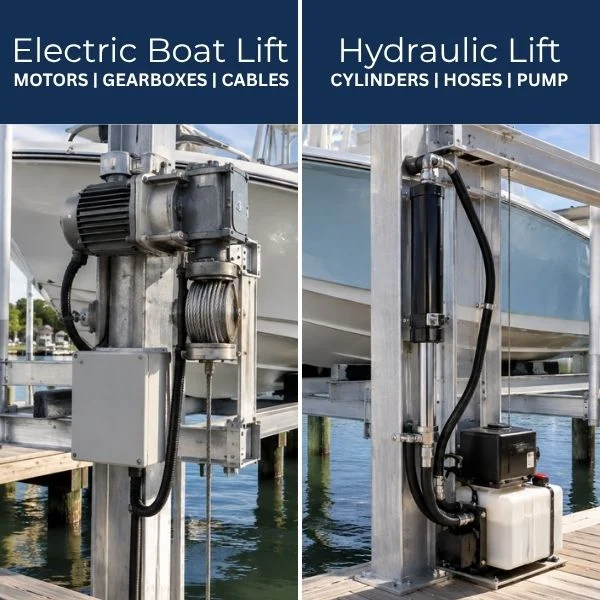
Electric lifts rely more heavily on motors, gearboxes, cables, switches, and electrical connections. Hydraulic lifts add another set of components to watch, including hydraulic fluid, hoses, cylinders, pumps, and seals. The right maintenance approach depends on the system you have and the conditions it operates in.
Electric Boat Lift Maintenance
Electric boat lifts are common along the North Carolina coast and typically use an electric motor and gearbox to raise and lower the boat.
Regular maintenance should focus on:
F&S Lift Pro notes that coastal lifts should be inspected regularly for cable wear, corrosion, loose hardware, motor strain, and electrical issues.
Hydraulic Boat Lift Maintenance
Hydraulic lifts use hydraulic pressure rather than a traditional cable-and-drum drive system to move the cradle.
Maintenance usually includes:
Hydraulic systems have fewer traditional cable-drive components, but they introduce pressurized parts that require their own inspections and service.
What’s the Biggest Difference?
The main difference is where the wear happens.
With an electric lift, maintenance often centers on cables, motors, gearboxes, pulleys, and electrical controls.
With a hydraulic lift, more attention goes toward fluid condition, hoses, cylinders, seals, and the hydraulic pump.
Both systems still need regular checks for corrosion, loose hardware, alignment, and structural wear, especially in coastal environments. F&S recommends visual inspections at least monthly and professional maintenance once or twice a year for local lifts.
Which Type Requires More Maintenance?
Neither system is maintenance-free.
Electric lifts may require more attention to cables and mechanical drive components, while hydraulic lifts require monitoring of fluid and pressurized components. The amount of maintenance also depends on how often the lift is used, its age, the boat’s weight, and exposure to saltwater and weather.
For most owners, consistent maintenance matters more than the lift type itself.